


1.1.3 AI vs Human Intelligence
1.1.3 AI vs Human Intelligence
|
Aspect |
Artificial Intelligence (AI) |
Human Intelligence |
|
Definition |
Intelligence demonstrated by machines and computer systems. |
Natural intelligence possessed by human beings. |
|
Learning Method |
Learns from data, algorithms, and training models. |
Learns from experience, education, observation, and reasoning. |
|
Speed |
Processes large amounts of data very quickly. |
Processes information more slowly than AI. |
|
Creativity |
Can generate content based on existing data patterns. |
Can create original ideas, imagination, and innovations. |
|
Emotions |
Does not possess real emotions or feelings. |
Has emotions, empathy, and social understanding. |
|
Decision Making |
Makes decisions based on programmed rules and data analysis. |
Uses reasoning, intuition, emotions, and experience. |
|
Adaptability |
Limited to its programming and training data. |
Highly adaptable to new and unexpected situations. |
|
Memory |
Can store and retrieve vast amounts of data accurately. |
Memory capacity is limited and may forget information. |
|
Accuracy |
Performs repetitive tasks with high accuracy. |
May make errors due to fatigue or distractions. |
|
Self-Awareness |
Has no consciousness or self-awareness. |
Possesses self-awareness and consciousness. |

You may also like

Nyereka Tech and Tumba College Explore Opportunities for Collaboration
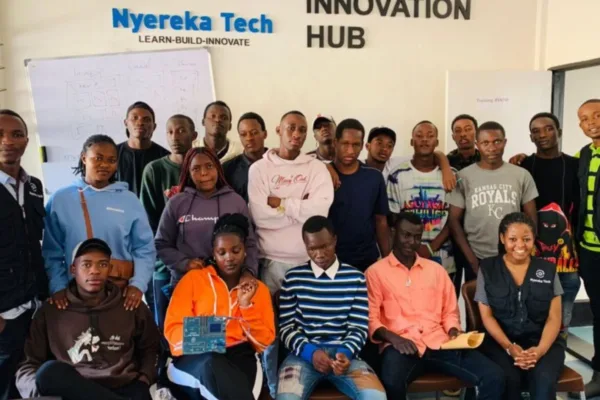
The Launch of our IoT Innovation Hub