


2.1 FUNDAMENTALS OF SOLDERING
Introduction
Soldering is a fundamental skill in electronics that allows components to be securely connected to a circuit. Before learning practical soldering techniques, it is important to understand what soldering is, where it is used, and the different types of soldering commonly found in industry.
What is Soldering?
Soldering is the process of joining two or more metal surfaces using a filler metal called solder. During soldering, the solder is heated until it melts and flows between the metal surfaces. As it cools, it forms a strong electrical and mechanical connection.
Unlike welding, soldering does not melt the parts being joined. Only the solder melts, making the process suitable for delicate electronic components.

Why is Soldering Important?
Soldering plays an essential role in electronics because it:
- Creates reliable electrical connections.
- Secures components firmly to a PCB.
- Helps electronic devices operate correctly.
- Makes repairs and component replacement possible.
Almost every electronic device, from mobile phones and televisions to computers and industrial equipment, contains soldered connections.
Applications of soldering
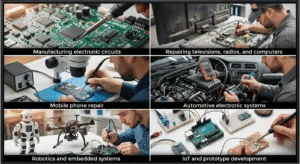
Soldering is commonly used in:
- Manufacturing electronic circuits.
- Repairing televisions, radios, and computers.
- Mobile phone repair.
- Automotive electronic systems.
- Robotics and embedded systems.
- IoT and prototype development.
Types of soldering
- Soft soldering
Soft soldering is the most common type used in electronics. It uses solder with a relatively low melting point, making it safe for delicate electronic components.
- Hard soldering
Hard soldering uses higher temperatures and stronger filler materials. It is mainly used in plumbing, refrigeration, and metal fabrication rather than electronics.
- Through-hole and Surface-mount technology
Electronic components are mounted on PCBs using two common methods:
- Through-hole technology (THT)
Components have long leads that pass through holes drilled in the PCB and are soldered on the opposite side. This method provides strong mechanical support and is commonly used in education, prototyping, and some industrial applications.

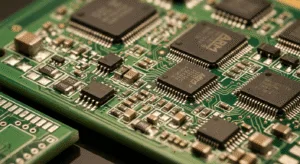
- Surface-mount technology (SMT)
Components are mounted directly onto the surface of the PCB without passing through holes. SMT allows electronic devices to be smaller, lighter, and more compact, making it the preferred technology for modern electronics.
Professional tip: Good soldering begins with understanding the purpose of each connection. Always aim to create a connection that is both electrically reliable and mechanically secure.
Safety reminder: Even when learning the theory of soldering, remember that practical soldering should always be performed using appropriate PPE and safe workshop practices.
Common mistake: Many beginners think soldering simply means “melting solder.” In reality, the goal is to create a strong, reliable connection by heating the joint properly and allowing the solder to flow smoothly over the surfaces being joined.
Key takeaways
- Soldering joins metal surfaces using molten solder.
- Soldering creates both electrical and mechanical connections.
- Soft soldering is the standard method used in electronics.
- Modern electronic devices commonly use Surface-Mount Technology (SMT).
Summary
In this lesson, you learned what soldering is, why it is important, where it is commonly used, and the difference between soft soldering and hard soldering. You also learned about the two main methods of mounting electronic components on a PCB: Through-Hole Technology (THT) and Surface-Mount Technology (SMT).

You may also like

Nyereka Tech and Tumba College Explore Opportunities for Collaboration

The Launch of our IoT Innovation Hub