


2.2 SOLDERING MATERIALS
Overview
The quality of a soldered joint depends not only on the soldering technique but also on the materials used. This lesson introduces the common materials used in electronics soldering and explains their functions.
Having the appropriate soldering equipment is important for effective maintenance and repair work. In repair work, the goal is not only to make a connection but also to produce a reliable, clean, and durable repair while avoiding damage to components or the PCB.
Some essential equipment includes:
- Solder
Solder is a metal alloy used to join electronic components to a PCB or connect wires together. When heated, it melts and flows over the joint, creating a reliable electrical and mechanical connection.
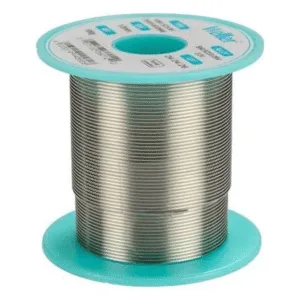
Figure: Solder
There are two common types of solder:
- Leaded solder – Usually made from tin and lead. It melts at a lower temperature and is easier to work with, but its use has decreased because lead can be harmful to health and the environment.
- Lead-free solder – Contains tin mixed with metals such as silver or copper. It is widely used today because it is safer for people and the environment.
- Flux
Flux is a chemical substance that removes oxidation from metal surfaces during soldering. It helps the solder flow evenly and improves the quality of the solder joint.
Using the correct amount of flux helps produce clean and reliable connections.

Figure: flux applied to the board to produce clean and reliable solder connections.
- Solder paste
Solder paste is a mixture of tiny solder particles and flux. It is mainly used for Surface-Mount Technology (SMT), where electronic components are placed on the PCB before being heated in a reflow process or with a hot-air station.

Figure: Solder paste
- Cleaning materials
After soldering, some flux residues may remain on the PCB. Cleaning materials such as isopropyl alcohol (IPA) and a soft brush are commonly used to remove these residues and leave the board clean.
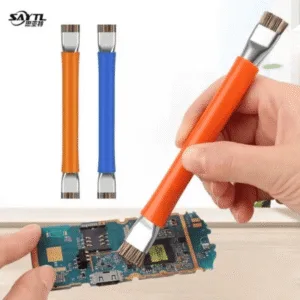
Figure: soft brushes for cleaning cell phone boards
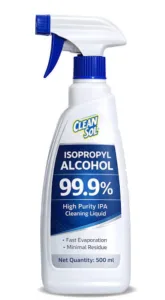
Figure: Isopropyl alcohor for cleaning
A clean PCB is easier to inspect and may improve long-term reliability.
Professional tip: Always choose the solder and flux that are suitable for your soldering task. Using the correct materials makes soldering easier and improves the quality of your work.
Safety reminder: Avoid direct contact with solder and flux, and always wash your hands after soldering, especially when using leaded solder.
Common mistake: Applying too much flux does not produce a better solder joint. Use only the amount needed to help the solder flow properly.
Key takeaways
- Solder is used to join electronic components.
- Lead-free solder is commonly used in modern electronics.
- Flux removes oxidation and improves solder flow.
- Solder paste is mainly used for SMT soldering.
- Cleaning the PCB after soldering helps with inspection and reliability.
Summary
In this lesson, you learned about the common materials used in soldering, including solder, flux, solder paste, and cleaning materials. You also learned the purpose of each material and why choosing the correct materials is important for producing high-quality solder joints.

You may also like

Nyereka Tech and Tumba College Explore Opportunities for Collaboration

The Launch of our IoT Innovation Hub